


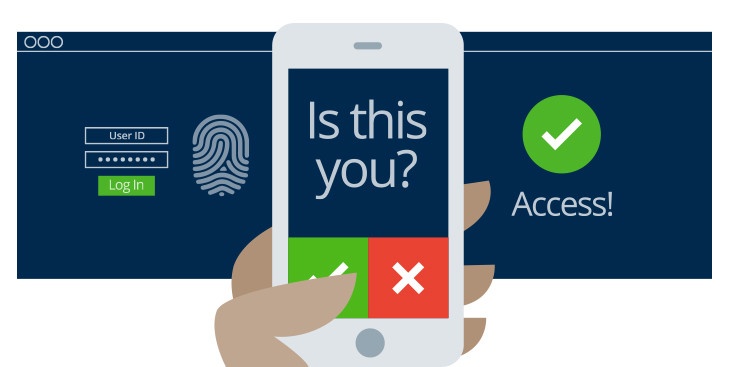
Has your small and medium-sized business (SMB) moved to the cloud but has not enabled Multi-Factor Authentication (MFA)? This tool is a proven game-changer for data security in the fast-growing shift to remote work. So why do statistics show that enforcing MFA within organizations is very low? MFA is a cloud security essential and simply needs to be enabled and enforced to provide secure end-user access to your corporate data. Here is a look at some revealing statistics that show just how important MFA is at keeping cybercriminals out of your network.
Systems Engineering
Recent Posts

As first announced back in 2017, Adobe planned to stop updating and supporting their Flash Player, setting the end-of-life date on December 31, 2020.
Additionally, as of January 12, 2021, Adobe is now blocking Flash content from running in Flash Player.

At Systems Engineering, employees are our number one resource. Our success depends on our dedicated and skilled staff who share our values and contribute to our vision. The Systems Engineering Spotlight gives a brief yet revealing look at one of our valuable members.

UPDATE FOR THURSDAY, JANUARY 21
As you may have seen in the headlines, Malwarebytes recently announced it was targeted by the same threat actor who attacked SolarWinds. After an extensive investigation, Malwarebytes reported their Microsoft Office 365 and Azure environments were targeted, but they found “no evidence of unauthorized access or compromise in any internal on-premises and production environments.”

One of the most important documents your organization can create is a Business Continuity Plan (BCP). This plan is a comprehensive review of how your organization will continue to operate when responding to unplanned disasters that impact business processes, applications, and IT infrastructure. We are all familiar with the burdens that the COVID-19 pandemic placed on businesses throughout the world. Companies that had a BCP in place were much better positioned to transition to a remote work scenario than those without. The level of response this pandemic required highlighted the importance of business continuity planning and raised some unforeseeable questions that all companies should now ask themselves.

When it comes to cloud security, ensuring your sensitive data remains secure is a bigger challenge than ever. Cyberattacks are on the rise, and according to "The State of Ransomware 2020" report, businesses are attacked by cybercriminals every 11 seconds. The cost of these increasing attacks is anticipated to be around $20 billion by 2021. So how can your small to medium-sized business (SMB) protect against these organized cyberattacks? Below we review data loss prevention (DLP), which is part of a multi-layer security strategy. DLP is designed to stop the accidental (or intentional) loss of sensitive information from an organization's network, before it's too late.

Has your company decided to transition a portion or all your employees to work-from-home long-term? What may have started as a temporary means to an end is working well, and you have decided to embrace this new way of doing business. What you need now is to ensure your remote employees can continue to get their work done as productively and securely as possible.